Background & History
The Trinitarian Order
Founding
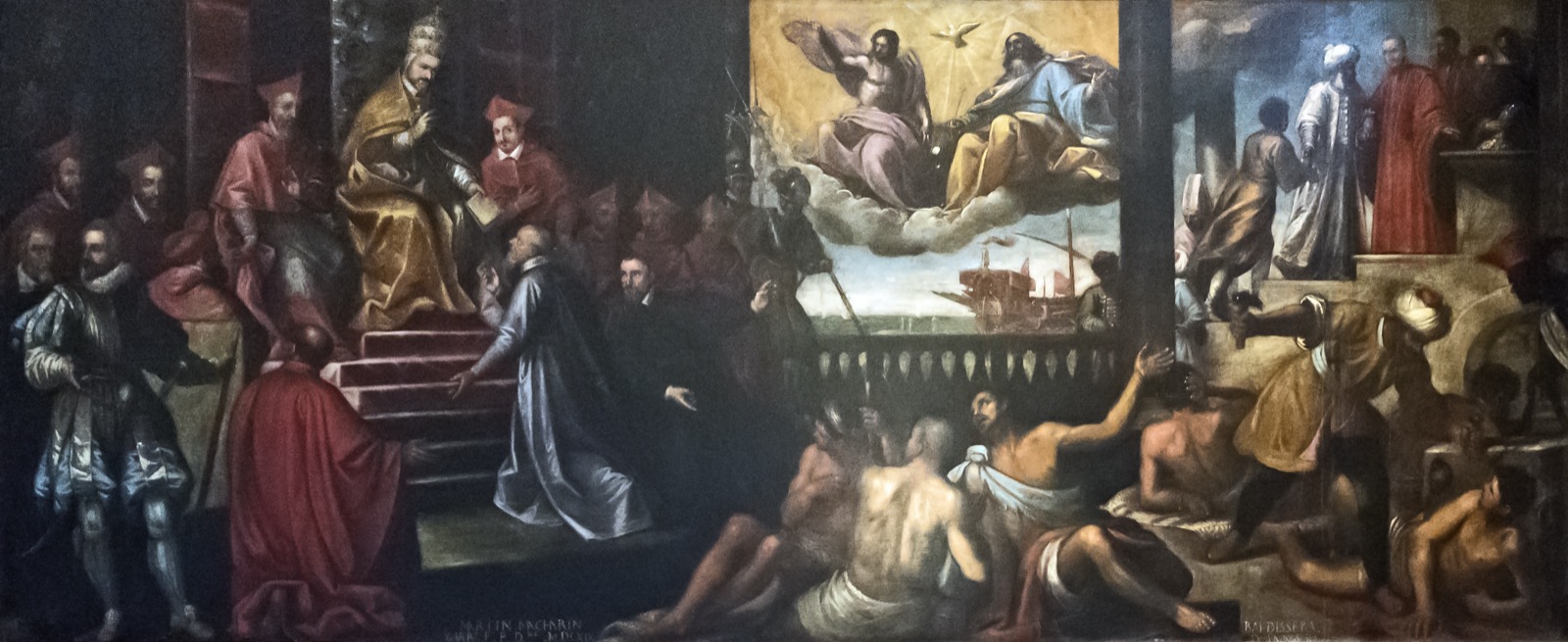
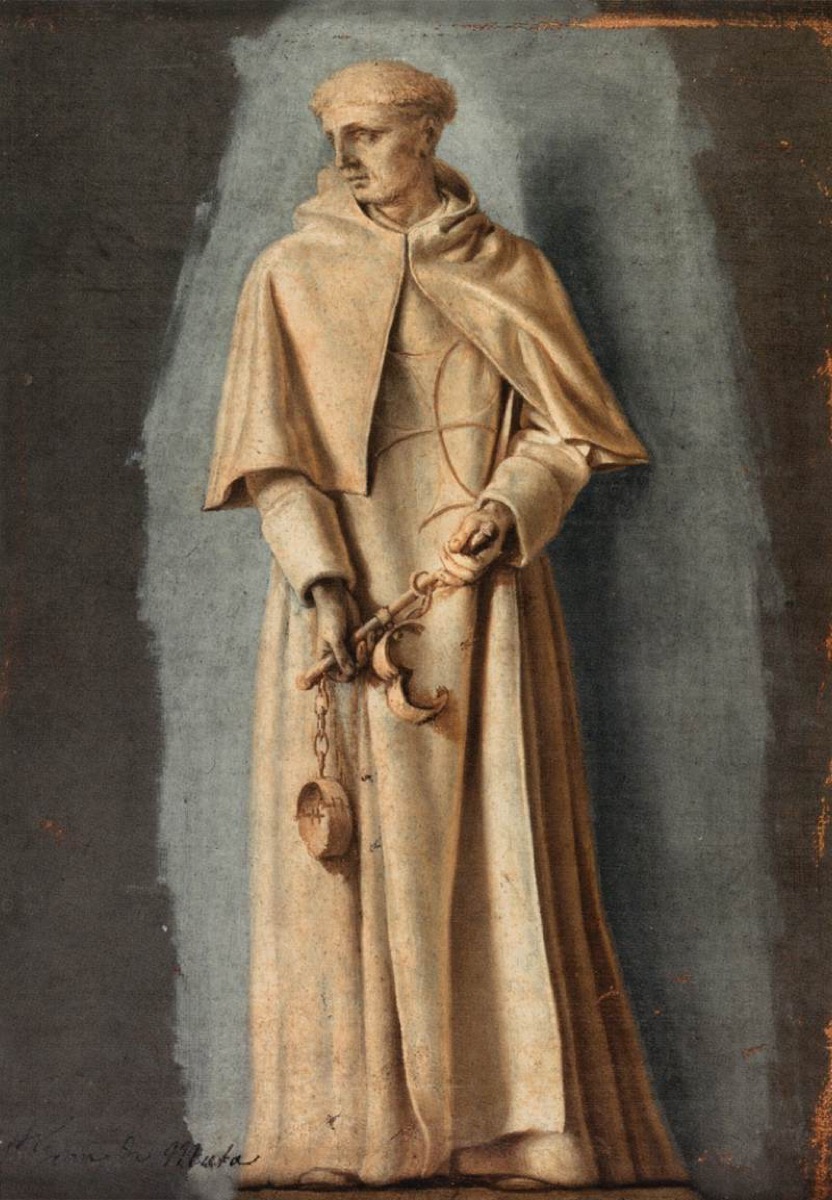
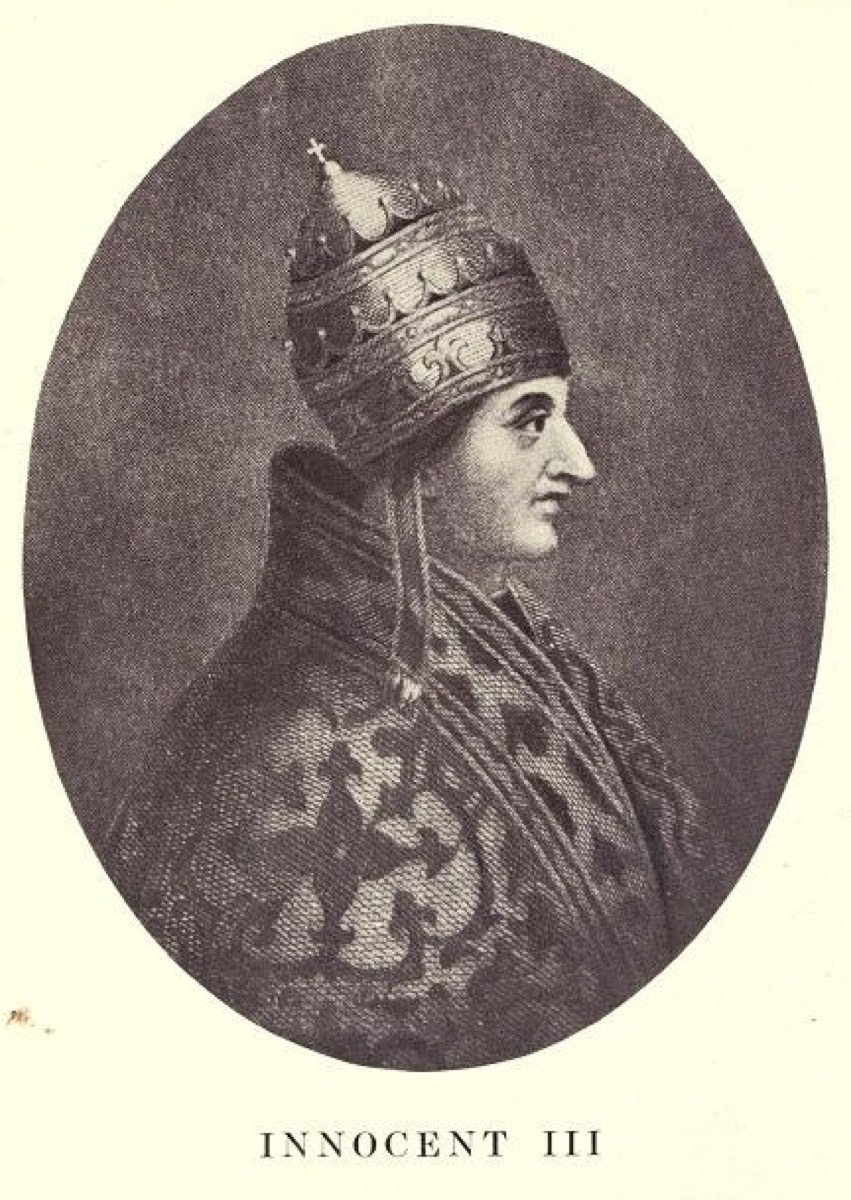
The Order of the Most Holy Trinity and of the Captives was founded by Saint John de Matha (c. 1154–1213), with Saint Felix de Valois (d. c. 1212) as co-founder. According to tradition, during St. John de Matha’s first Mass he received a vision of Christ the Redeemer between two captives — revealing his call to ransom Christian captives. In the traditional account the figure is clothed in white and bears a red and blue cross on the breast, hands resting on the heads of the two captives; this vision is the stated origin of the Order’s cross. The Order’s proper Rule was approved by Pope Innocent III on 17 December 1198 (bull Operante divinae dispositionis clementia), which directs that the brothers’ garments be “woolen and white.”
The Charism
The Trinitarians exist for two ends: the glorification of the Most Holy Trinity and the redemption (ransom) of captives. Born of the historical work of redeeming Christians held captive, this charism continues today in prayer, works of mercy, and the ongoing redemption of the “captives of our day.” Members call themselves the “house of the Trinity and of captives.”
The Habit & the Cross of Two Colors
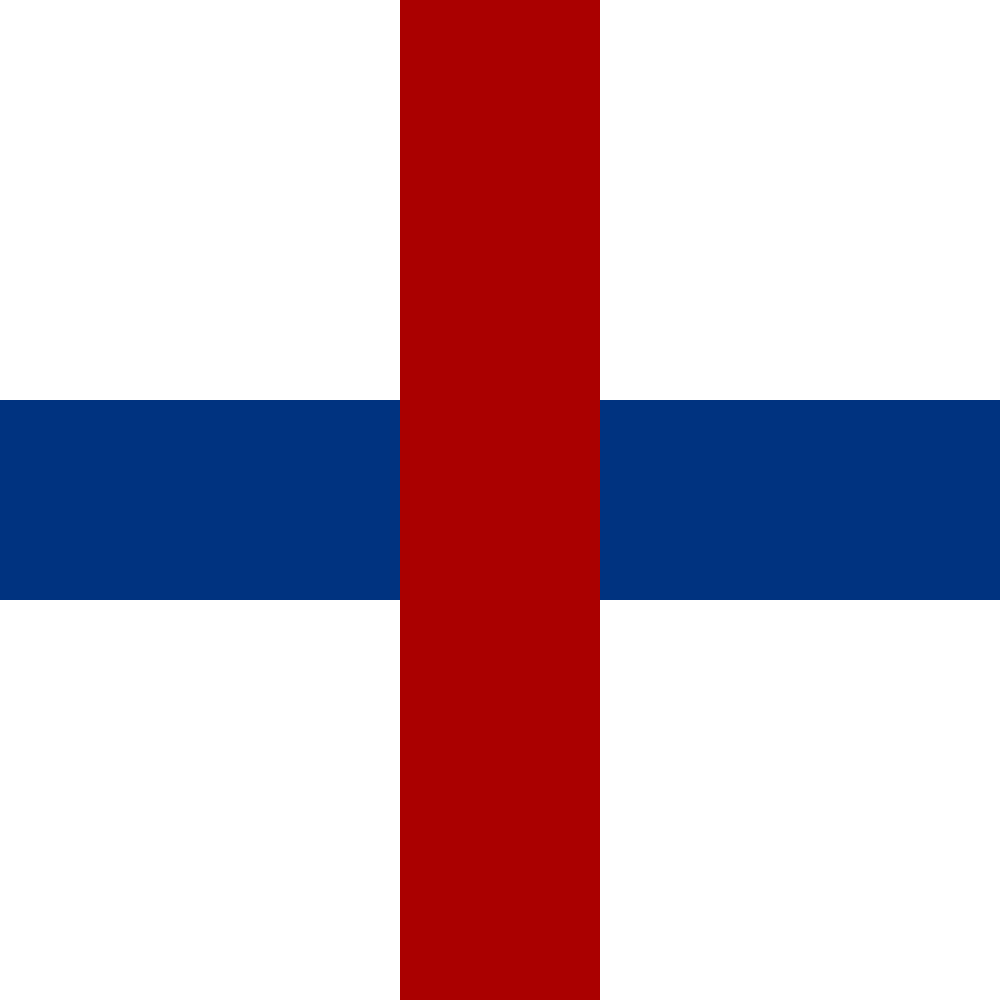
The white Trinitarian habit bears the Cross of the Two Colors — a Greek cross with a red vertical bar over a blue horizontal bar. The three colors encode the Trinity: the white field is God the Father, the blue horizontal bar is God the Son as Redeemer, and the red vertical bar is God the Holy Spirit, charity. This emblem is the visual heart of the Order’s identity.
The Order’s use of the Greek cross is heraldic rather than liturgical or architectural. An equal-armed cross is simply the natural geometry for displaying a symmetrical vertical and horizontal bar on the breast of a white habit; a Latin cross, with its longer lower arm, would leave the two-bar Trinitarian scheme lopsided. The red-and-blue cross belonged to the habit from the beginning, and the shield is cited by heraldists as a textbook case of arms granted by papal authority to a religious order rather than merely adopted by the community. In other words, the choice of this particular cross form is not itself an argument about cardinal directions — it is a practical heraldic decision that happens to use the Greek cross.
That said, the form of the cross carries a wider meaning in Christian tradition. Because a Greek cross has four arms of equal length, the Fathers read it as reaching out in every direction at once. St. Cyril of Jerusalem, whose Catechetical Lectures (4th century) are held in high authority in the Catholic tradition, taught that the cross sanctifies the whole of creation precisely because its arms stretch out universally. St. Augustine (Sermon 218) likewise saw in the four arms the love of Christ embracing all directions, and St. Gregory of Nyssa described the cross as the meeting point of heaven and earth. The scriptural foundation usually cited for this four-direction symbolism is Ephesians 3:18 — that you may comprehend, with all the saints, “what is the breadth and length and height and depth.”
Patrons & Principal Saints
- Our Lady of Good Remedy — principal patroness (Solemnity, 8 October).
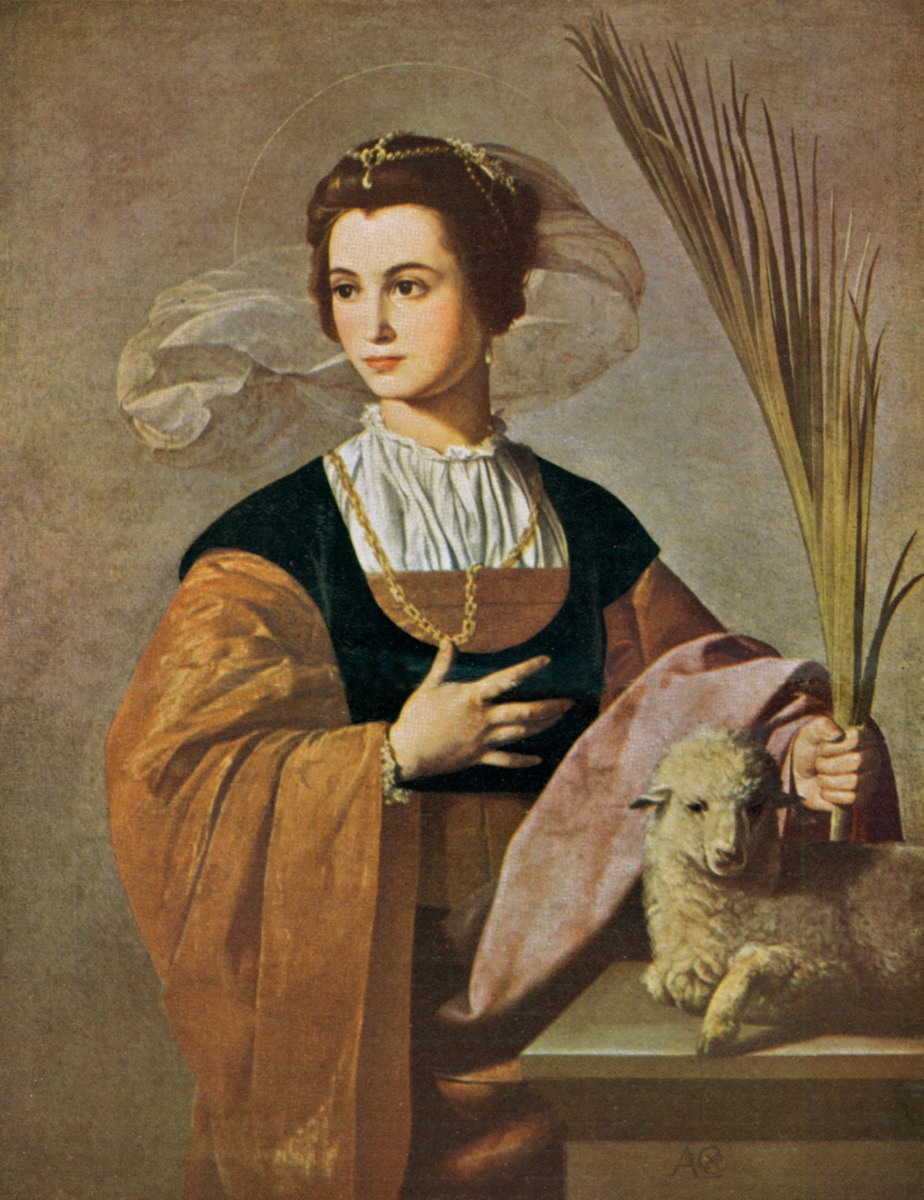
- Saint Agnes — principal patroness (Feast, 28 January).
- Saint John de Matha — Founder (Solemnity, 17 December).
- Saint Felix de Valois — Co-founder (Memorial, 4 November).

The Trinitarian Way — the handbook
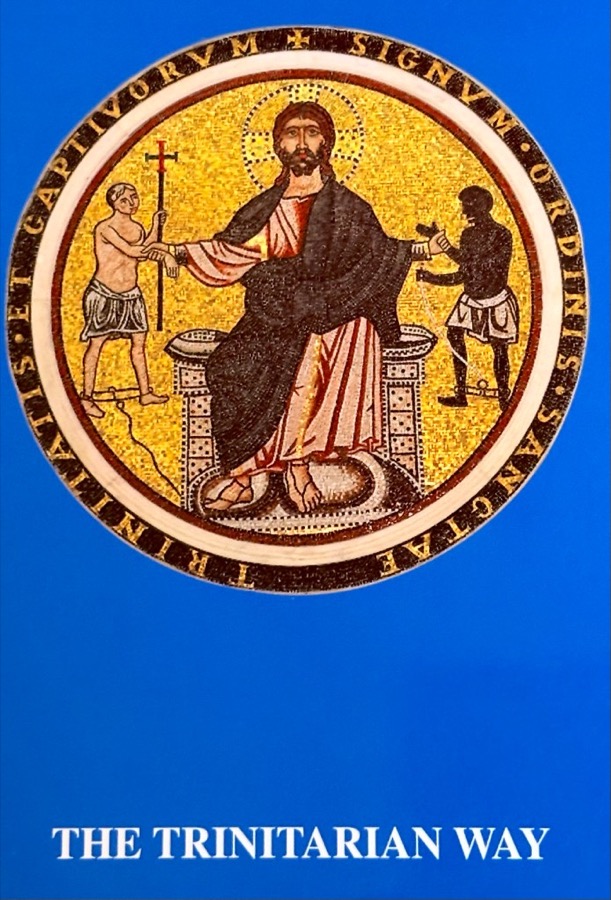
On this site, The Trinitarian Way means the Order’s English-language handbook (last published 2010) — not a separate organization or website. It is a formation and prayer book for Trinitarians, especially helpful for the lay Third Order.
It gathers practical guidance for living the Trinitarian charism: consecration to the Most Holy Trinity, the daily Trisagion, the Order’s proper feast calendar, and related prayers and instructions. When we cite feast days or the English short Trisagion, we are usually pointing to this book.
The cover mosaic shows Christ the Redeemer between two captives — the founding vision of St. John de Matha — with the Latin legend Signum Ordinis Sanctae Trinitatis et Captivorum (“Sign of the Order of the Holy Trinity and of Captives”).
The Order Today
The Trinitarians are a Catholic clerical religious order (of Pontifical Right) comprising priests, brothers, nuns, and lay members of the Third Order, serving worldwide. The Curia Generalizia is in Rome.
Sources
- Order of the Most Holy Trinity — Curia Generalizia: trinitari.org
- Trisagion (Italian forms): trinitari.org/devozioni
- Trinitarian liturgical calendar (Calendario liturgico – Feste): trinitari.org/calendario-liturgico-feste
- U.S. Province: trinitarians.org
- Third Order: thirdordertrinitarians.org
- The Trinitarian Way (English handbook, 2010) — formation/prayer book used for the English short Trisagion and as a cross-check for the feast calendar. Sanctus on this site follows the 2011 Roman Missal (“God of hosts”); the 2010 book still prints “God of power and might.” See above.
- English longer Trisagion: modern USA form (not the long form printed in the 2010 handbook).
Texts and historical facts are attributed to the Order of the Most Holy Trinity and of the Captives. This site is informational and not an official publication of the Order. Image licenses: see assets/img/SOURCES.md.